In industrial fields such as motors, transformers, and electronic components, enamelled wire, as a core winding material, directly determines the performance, cost, and service life of products. Among them, AWG enamelled aluminium wire has become one of the mainstream alternatives to copper enamelled wire due to its prominent advantages such as controllable cost and light weight. This article will comprehensively and detailedly analyze the core knowledge of AWG enamelled aluminium wire, from standard definition, structural materials, technical parameters, advantage comparison, application scenarios to selection skills, helping industry practitioners and purchasers quickly grasp key information and accurately select suitable products.
I. Introduction: What is AWG Enamelled Aluminium Wire?AWG enamelled aluminium wire, full name American Wire Gauge (
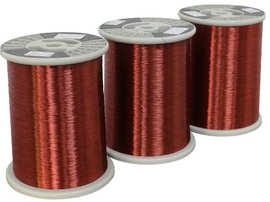
AWG) enamelled aluminium wire, is a winding wire (also known as magnet wire) made of high-purity electrolytic aluminium as the conductor and a layer of insulating enamel coated on the surface. It is mainly used for winding various electromagnetic equipment such as motors, transformers, and inductors.
Compared with traditional copper enamelled wire, AWG enamelled aluminium wire effectively solves the pain points of high copper cost and heavy weight on the premise of ensuring basic electrical performance, so it is widely used in household, industrial, automotive, new energy and other fields.
This article will sequentially disassemble the AWG standard, the structural materials of enamelled aluminium wire, core technical parameters, core advantages, differences from copper enamelled wire, main application scenarios, selection methods and common questions, providing readers with a comprehensive reference guide.
 II. Core Standard of AWG Enamelled Aluminium Wire: What is AWG?2.1 Definition of AWG Standard
AWG, namely American Wire Gauge, is a widely adopted wire specification standard in North America and many countries around the world. It is mainly used to define the diameter, cross-sectional area and related electrical performance parameters of wires, and is one of the core reference bases for enamelled wire selection.
Different from the commonly used millimeter (mm) diameter standard in China, AWG adopts the marking method of "the smaller the number, the larger the wire diameter". The larger the number, the thinner the wire, and the corresponding current-carrying capacity, mechanical strength and other performances will also change accordingly.
2.2 Relationship Between AWG Gauge and Wire DiameterThere is a clear corresponding relationship between AWG gauge and the diameter and cross-sectional area of enamelled aluminium wire, which is also a key reference for selection. For example:
- 10 AWG enamelled aluminium wire: diameter about 2.59mm, cross-sectional area about 5.26mm², large current-carrying capacity, suitable for high-power equipment;
- 20 AWG enamelled aluminium wire: diameter about 0.81mm, cross-sectional area about 0.51mm², suitable for small and medium-sized motors and inductors;
- 44 AWG enamelled aluminium wire: diameter about 0.08mm, cross-sectional area about 0.005mm², suitable for microelectronic components.
2.3 Common AWG Specifications and ConversionFor AWG enamelled aluminium wire, the commonly used specification range is 10–44 AWG, which basically covers all needs from high-power industrial equipment to microelectronic components. In daily selection, it is often necessary to convert AWG gauge to millimeter (mm), and the core conversion principle is as follows:
The formula for the wire diameter d (inches) corresponding to AWG gauge n is: d = 0.005 × 92^((36-n)/39). After converting to millimeters, you can refer to the industry general conversion table (such as 18 AWG ≈ 1.02mm, 24 AWG ≈ 0.51mm).
2.4 Reference to Relevant International StandardsIn addition to the AWG standard, the production and testing of AWG enamelled aluminium wire must also comply with the internationally accepted standard — IEC 60317‑0‑3 (IEC, International Electrotechnical Commission). This standard clearly specifies the core indicators such as insulation performance, thermal class requirements and dimensional tolerance of enamelled aluminium wire, which is an important basis for ensuring product quality.
III. Core Structure and Materials of AWG Enamelled Aluminium WireThe performance of AWG enamelled aluminium wire is mainly determined by two parts: conductor and insulating coating. The material and process of both directly affect the stability, service life and applicable scenarios of the product.
3.1 Conductor: High-Purity Electrolytic AluminiumThe conductor is the core of AWG enamelled aluminium wire, which is made of high-purity (≥99.7%) electrolytic aluminium. The advantages of high-purity aluminium are: stable electrical conductivity, which can meet the conduction needs of various electromagnetic equipment; soft material, easy to wind, suitable for the processing of complex windings; lower cost than copper, which can effectively reduce the overall production cost of equipment.
In addition, some high-end products will use aluminium alloy conductors to further improve mechanical strength and corrosion resistance, adapting to harsh working environments.
3.2 Insulating Coating: Selection of Different Types of Enamel LayersThe function of the insulating coating (enamel layer) is to isolate the conductor and prevent short circuit. Its material and thickness directly determine the thermal class, voltage resistance performance and service life of the enamelled wire. At present, there are 4 main types of insulating enamel commonly used for AWG enamelled aluminium wire, each with applicable scenarios:
3.2.1 Polyester (PE) Enamel LayerPolyester enamel layer is the most basic and commonly used insulation type, with low cost and good insulation performance. It is suitable for scenarios with working temperature ≤ 130℃, such as small household motors, ordinary transformers, toy motors, etc.
3.2.2 Polyimide (PEI) Enamel LayerThe heat resistance of polyimide enamel layer is better than that of polyester, the working temperature can reach 155–180℃, and it has good chemical resistance and mechanical strength. It is suitable for industrial motors, electronic transformers and other equipment in medium and high temperature environments.
3.2.3 Polyamide-Imide (PAI) Enamel LayerPolyamide-imide enamel layer is a high-end insulation type, with heat resistance temperature up to 200℃, strong voltage resistance, scratch resistance and wear resistance. It is suitable for high temperature, high pressure and high load scenarios, such as new energy vehicle motors, industrial high-frequency transformers, etc.
3.2.4 Polyimide (PI) Enamel LayerPolyimide enamel layer has the best heat resistance, with working temperature up to 220–240℃, and excellent radiation resistance and low temperature resistance. It is suitable for extreme environments, such as aerospace electronic equipment, high-temperature sensors, etc.
3.3 Insulation Structure: Single Layer vs. Composite LayerThe insulation structure of AWG enamelled aluminium wire is divided into two types: single-layer insulation and composite-layer insulation.
- Single-layer insulation: only one single enamel layer mentioned above is coated, with low cost and simple process, suitable for ordinary scenarios;
- Composite-layer insulation: two or more different types of enamel layers (such as PE+PAI) are coated, combining the advantages of different enamel layers, taking into account heat resistance, voltage resistance and wear resistance, suitable for high-end and complex scenarios.
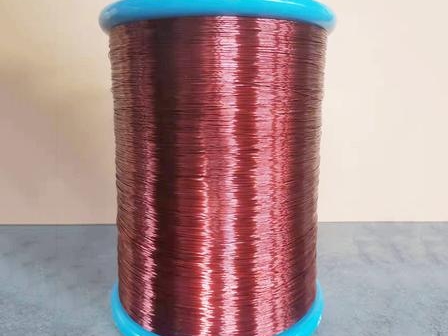
3.4 Core Requirements for Insulation LayerHigh-quality AWG enamelled aluminium wire must meet three core requirements for the insulation layer: smooth surface without burrs, easy for winding; no pinholes or damage, ensuring stable insulation performance; uniform thickness, avoiding insufficient local voltage resistance leading to short circuit.
 IV. Key Technical Parameters of AWG Enamelled Aluminium Wire
Technical parameters are the core basis for the selection of AWG enamelled aluminium wire, which directly determines whether the product is suitable for specific application scenarios. The following are the 6 most critical technical parameters that need to be focused on:
4.1 Thermal Class (Heat Resistance Temperature)Thermal class refers to the maximum temperature that the enamelled wire can withstand for long-term stable operation, which is directly related to the type of insulating enamel. The commonly used thermal classes are divided into 6 categories: 130℃, 155℃, 180℃, 200℃, 220℃, 240℃. When selecting, it is necessary to choose products with corresponding thermal classes according to the working temperature of the equipment, so as to avoid enamel layer aging and short circuit due to insufficient heat resistance.
4.2 Diameter Tolerance and Total Diameter- Diameter tolerance: refers to the allowable deviation of the conductor diameter. The smaller the deviation, the higher the precision of winding, avoiding loose or tight windings caused by uneven diameter;
- Total diameter: conductor diameter + insulation layer thickness. It is necessary to select according to the size of the equipment winding slot to ensure that it can be smoothly embedded into the slot without wasting space.
4.3 Breakdown VoltageBreakdown voltage is the core voltage resistance index of the insulation layer, referring to the minimum voltage at which the insulation layer is broken down and loses its insulation effect, with the unit of kV. The higher the breakdown voltage, the more stable the insulation performance, which is suitable for high-voltage equipment (such as transformers); ordinary equipment can choose products with conventional breakdown voltage to reduce costs.
4.4 Mechanical Properties: Adhesion, Flexibility, Scratch Resistance- Adhesion: the bonding strength between the enamel layer and the conductor. Poor adhesion will lead to enamel layer falling off during winding, causing short circuit;
- Flexibility: the bending performance of the enamel layer. Enamelled wire with good flexibility can adapt to complex winding shapes and is not easy to break;
- Scratch resistance: the ability of the enamel layer to resist scratching and wear, avoiding enamel layer damage during winding and installation.
4.5 Thermal Shock and Softening Breakdown- Thermal shock: refers to the stability of the insulation layer of the enamelled wire in the alternating environment of high and low temperatures, avoiding enamel layer cracking caused by temperature changes;
- Softening breakdown: refers to the phenomenon that the insulation layer of the enamelled wire softens and loses insulation performance at high temperatures, which must meet the standard requirements of the corresponding thermal class.
4.6 Resistivity (Comparison with Copper)The resistivity of aluminium is slightly higher than that of copper (aluminium resistivity ≈ 2.83×10^-8 Ω·m, copper resistivity ≈ 1.72×10^-8 Ω·m). However, in practical applications, the difference in electrical conductivity can be made up by increasing the cross-sectional area of the wire, while taking into account the cost advantage.
 V. Core Advantages of AWG Enamelled Aluminium Wire
Compared with copper enamelled wire and other types of winding wires, AWG enamelled aluminium wire can be widely used because it has advantages in cost, performance, processing and other aspects. The details are as follows:
5.1 Significant Cost Advantage and High Cost-EffectivenessThe market price of aluminium is much lower than that of copper (about 1/3–1/4 of the copper price), and the production process of AWG enamelled aluminium wire is similar to that of copper enamelled wire, which does not require large-scale transformation of production equipment. Therefore, it can effectively reduce the production cost of winding wires and terminal equipment, especially suitable for mass-produced household and industrial equipment.
5.2 Light Weight, Reducing the Overall Weight of EquipmentThe density of aluminium is about 2.7g/cm³, only about 1/3 of that of copper (8.96g/cm³). Using AWG enamelled aluminium wire as the winding material can greatly reduce the weight of motors, transformers and other equipment, especially suitable for weight-sensitive scenarios, such as new energy vehicles, aerospace equipment, portable electronic equipment, etc.
5.3 Excellent Electrical Conductivity, Suitable for Most ScenariosAlthough the resistivity of aluminium is slightly higher than that of copper, through reasonable design of the cross-sectional area of the wire, AWG enamelled aluminium wire can meet the electrical conductivity needs of most scenarios, especially medium and low-power equipment such as household motors, ordinary industrial motors and transformers, which can completely replace copper enamelled wire.
5.4 Good Winding Performance, Facilitating Mass ProductionHigh-purity aluminium conductor is soft and has good bending performance, which is not easy to break during winding. Moreover, the insulating enamel layer is smooth, which can reduce the friction during winding, improve production efficiency, and is suitable for mass production of automatic winding equipment.
5.5 Stable Insulation and Long Service LifeThe insulation layer of high-quality AWG enamelled aluminium wire has passed strict testing, with good heat resistance, wear resistance and chemical corrosion resistance. Under normal working conditions, the service life can reach 10–20 years, which is equivalent to that of copper enamelled wire.
5.6 Corrosion Resistance, Adapting to Complex EnvironmentsAluminium will form a dense oxide film in the air, which can effectively prevent the conductor from being corroded. Therefore, AWG enamelled aluminium wire is suitable for use in humid and slightly corrosive environments, such as outdoor transformers, marine equipment, etc.
.jpg) VI. AWG Enamelled Aluminium Wire vs. Enamelled Copper Wire: Core Differences and Applicable Scenarios
VI. AWG Enamelled Aluminium Wire vs. Enamelled Copper Wire: Core Differences and Applicable ScenariosIn the winding wire market, AWG enamelled aluminium wire and enamelled copper wire are the two most mainstream products. Both have their own advantages and disadvantages. When selecting, it is necessary to comprehensively judge according to equipment needs and cost budget. The specific differences are as follows:
6.1 Comparison of Electrical ConductivityThe electrical conductivity of enamelled copper wire is better than that of AWG enamelled aluminium wire, with lower resistivity. Under the same cross-sectional area, enamelled copper wire has larger current-carrying capacity, which is suitable for high-power, high-frequency and high-precision equipment (such as high-end industrial motors, precision instruments); AWG enamelled aluminium wire can make up for the conductivity gap by increasing the cross-sectional area, which is suitable for medium and low-power scenarios.
6.2 Comparison of Weight and DensityAs mentioned earlier, the density of aluminium is only 1/3 of that of copper. The weight of AWG enamelled aluminium wire is much lighter than that of enamelled copper wire of the same specification, which is one of its core advantages, especially suitable for weight-sensitive scenarios; enamelled copper wire is heavier, suitable for fixed equipment with no weight requirements (such as large transformers).
6.3 Comparison of CostThe cost of AWG enamelled aluminium wire is about 1/3–1/2 of that of
enamelled copper wire. Mass use can greatly reduce equipment costs; enamelled copper wire has higher cost, suitable for scenarios with high performance requirements and sufficient budget.
6.4 Comparison of Thermal PerformanceThe thermal performance of both mainly depends on the type of insulating enamel. Under the same thermal class, the thermal stability is similar; but the thermal conductivity of copper is better than that of aluminium, and the heat dissipation effect of enamelled copper wire is better, which is suitable for long-term working scenarios with high temperature and high load.
6.5 Summary of Applicable Scenarios- Priority to choose AWG enamelled aluminium wire: medium and low-power equipment, weight-sensitive equipment (such as new energy vehicle auxiliary motors, portable electronic equipment), mass production and budget-constrained scenarios (such as household motors, ordinary transformers);
- Priority to choose enamelled copper wire: high-power, high-frequency, high-precision equipment (such as high-end industrial motors, precision instruments), equipment working for a long time under high temperature and high load, scenarios with high requirements for electrical conductivity.
VII. Main Application Scenarios of AWG Enamelled Aluminium WireWith advantages in cost, weight, performance and other aspects, the application scenarios of AWG enamelled aluminium wire cover household, industrial, automotive, new energy and other fields. The details are as follows:
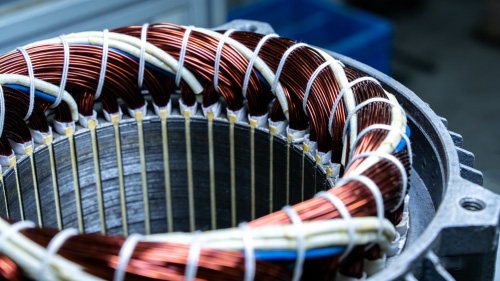
7.1 Motor FieldThis is the most important application scenario of AWG enamelled aluminium wire, covering various types of motors:
- Household motors: drive motors of household appliances such as electric fans, washing machines, air conditioners, refrigerators, range hoods;
- Industrial motors: medium and low-power industrial drive equipment such as small industrial water pumps, fans, and conveyor belt motors;
- Automotive motors: new energy vehicle auxiliary motors (such as air conditioning compressor motors, steering motors), traditional automotive generators, etc.
7.2 Transformers and Distribution TransformersIt is suitable for medium and low-voltage transformers, distribution transformers, electronic transformers, etc. Especially for outdoor distribution transformers and small power transformers, the light weight and low cost advantages of AWG enamelled aluminium wire are particularly obvious, which can reduce installation and transportation costs, and ensure insulation stability.
7.3 Inductors, Coils, SolenoidsVarious inductors, coils and solenoids in electronic equipment, such as inductor coils in power adapters, solenoids in relays, voice coils in speakers, etc., can use AWG enamelled aluminium wire, taking into account performance and cost.
7.4 Automotive Electronics and GeneratorsIn addition to automotive motors, various small winding components in automotive electronics (such as ignition coils, sensor coils), as well as generator windings of traditional cars and new energy vehicles, also widely use AWG enamelled aluminium wire, which reduces the overall weight of the car and improves fuel economy or cruising range.
7.5 HVAC, Fans, Water PumpsThe fan and water pump motors in central air conditioning (HVAC) systems, as well as the drive motors of various industrial fans and civil water pumps, mostly use AWG enamelled aluminium wire, which adapts to the demand of long-term continuous work and controls equipment costs.
7.6 New Energy FieldThe new energy field is an emerging application scenario of AWG enamelled aluminium wire, mainly including:
- Wind power generation: auxiliary motors and inductor components in wind turbines;
- Photovoltaic inverters: inductors and coil windings in inverters;
- Energy storage equipment: connecting windings and protection components in energy storage battery packs.
VIII. How to Correctly Select AWG Enamelled Aluminium Wire? 6 Steps to Get It RightWhen selecting AWG enamelled aluminium wire, it is necessary to consider various factors such as equipment needs, working environment and performance requirements to avoid equipment failures caused by improper selection. The specific steps can be followed as follows:
8.1 Step 1: Determine the Required AWG Specification (Wire Diameter)According to the power and current-carrying capacity requirements of the equipment, combined with the corresponding relationship between AWG gauge, wire diameter and cross-sectional area, determine the appropriate AWG specification. Core principle: the higher the power and current-carrying capacity, the smaller the selected AWG gauge (thicker wire diameter); on the contrary, select products with larger gauge (thinner wire diameter). At the same time, refer to the size of the equipment winding slot to ensure that the wire diameter is suitable.
8.2 Step 2: Select Thermal Class According to Working TemperatureFirst, clarify the long-term working temperature of the equipment, then select the AWG enamelled aluminium wire with corresponding thermal class to ensure that the enamel layer can work stably for a long time without aging or breakdown. For example: the working temperature of household motors is about 80–100℃, and 130℃ thermal class can be selected; the working temperature of industrial high-temperature motors is about 120–150℃, and 155–180℃ thermal class can be selected.
8.3 Step 3: Select the Appropriate Insulation TypeSelect the corresponding type of insulating enamel according to the working temperature, voltage resistance requirements and working environment of the equipment:
- Ordinary scenarios (normal temperature, low voltage): select polyester (PE) enamel layer;
- Medium and high temperature, medium and high voltage scenarios: select polyimide (PEI), polyamide-imide (PAI) enamel layer;
- Extreme high temperature and high voltage scenarios: select polyimide (PI) enamel layer or composite-layer insulation.
8.4 Step 4: Consider Voltage and Working Environment- Voltage requirements: select products with corresponding breakdown voltage according to the working voltage of the equipment. High-voltage equipment needs to select enamelled wire with high breakdown voltage to avoid insulation breakdown;
- Working environment: humid and corrosive environments need to select insulating enamel types with good corrosion resistance (such as PAI); outdoor environments need to additionally consider UV resistance to avoid enamel layer aging.
8.5 Step 5: Check Compatibility with Winding ProcessCombined with the winding process of the equipment (automatic winding, manual winding), select products with appropriate flexibility and adhesion. Automatic winding equipment has higher requirements on the flexibility and surface smoothness of the enamelled wire. It is necessary to select products with uniform enamel layer and no burrs to avoid wire jamming and enamel layer falling off during winding.
8.6 Step 6: Verify Standard ComplianceWhen selecting, it is necessary to confirm that the product complies with relevant standards, such as AWG standard and IEC 60317‑0‑3 standard. At the same time, check the product's test report to ensure that parameters such as diameter tolerance, breakdown voltage and thermal class meet the requirements, so as to avoid purchasing unqualified products.
IX. Conclusion: Core Value and Selection Suggestions of AWG Enamelled Aluminium WireAs a winding material with controllable cost, light weight and stable performance, AWG enamelled aluminium wire has become one of the preferred winding wires for medium and low-power electromagnetic equipment due to its significant cost-effectiveness advantage, and is widely used in household, industrial, automotive, new energy and other fields.
Its core value lies in: providing electrical conductivity and insulation performance meeting the needs of most scenarios at a low cost, while greatly reducing the weight of equipment and adapting to the trend of lightweight development.
Finally, the core selection suggestions are given: there is no need to blindly pursue high performance when selecting. It is necessary to comprehensively consider factors such as equipment power, working temperature, voltage and cost budget, follow the principles of "specification matching, thermal class adaptation and insulation adaptation", and give priority to high-quality products complying with AWG and IEC standards; if the performance requirements are high and the budget is sufficient, composite-layer insulation or high-end enamel layer types can be selected; if pursuing cost and weight advantages, conventional AWG enamelled aluminium wire can meet the needs.
If customized specifications are needed (such as special AWG gauge, composite insulation layer), it is recommended to consult professional manufacturers and customize according to specific equipment needs to ensure product adaptability and stability.
